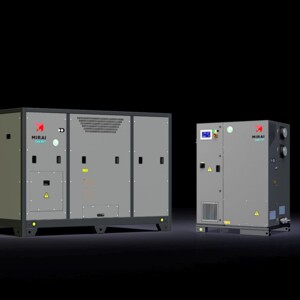
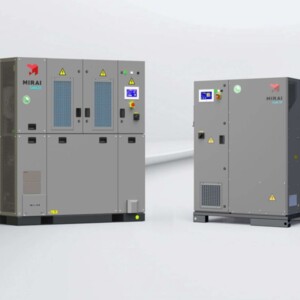
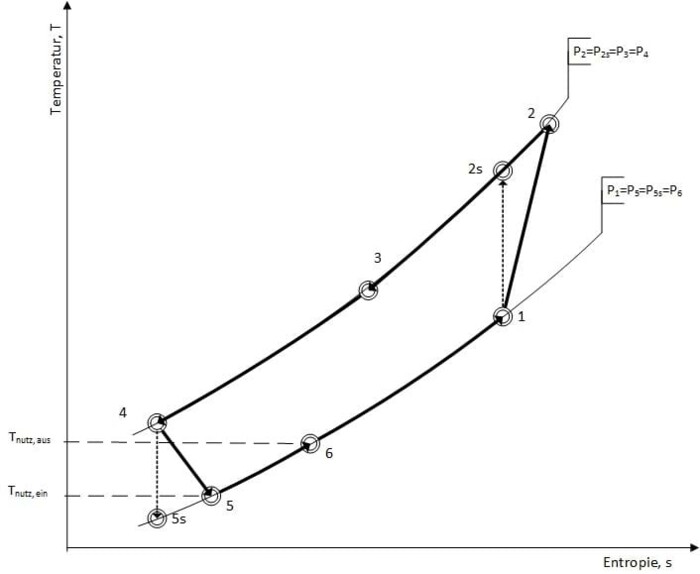
The cold air refrigeration technology from Mirai Intex works oil-free using only air as a refrigerant. Mirai Intex has developed a unique air-bearing turbo compressor expander for this purpose. The compressor and the expansion wheel (expander) are located on a shaft so that the expansion energy is fed back to the compression. The control of the frequency inverter allows any temperature to be selected and regulated to an accuracy of 0.5 K. As standard, the machines can control any temperature from -30 °C to -110 °C. In special versions, the range can be extended to -160 °C with air as the refrigerant. The pressures of the open machines are a maximum of 1 bar, which is less than the pressure of a bicycle tyre.
Air as a refrigerant is free, harmless and free from regulations.


Air as refrigerant / No refilling required / Environmentally friendly

No oil in the system thanks to the air bearing / Lower costs

Compliance with the law Compliance with all international standards / regulations

Stable cooling capacity when operating with cooling water

No chemical substances / No risk of fire or explosion

No vibrations and greatly reduced noise / The design of the turbomodule reduces noise and vibrations

One of the most common causes of failure in refrigeration systems is compressor damage caused by liquid refrigerant entering the compressor or insufficient lubrication, e.g. due to displaced oil or wear. Another frequent cause of failure is wear due to vibration, such as the burning of small oil lines. In cascade systems for low-temperature applications, several compressor circuits have to function simultaneously and influence each other. The cold air chillers have no phase change, no oil and virtually wear-free operation without vibration thanks to the air bearing. This technology therefore has a high level of reliability.

We have carried out a detailed study on the energy efficiency of low-temperature refrigeration technology and were able to prove that cold air refrigeration technology is highly efficient in the field of low-temperature technology. You can find the detailed study in our ULT report.