Information on refrigerants, as of June 2022

Information on refrigerants

Thermal energy only flows from hot to cold. A so-called heat sink is therefore required to cool a process. to cool a process. The heat sink is generated by a chiller. This requires both energy and a refrigerant. a refrigerant is required.

The impact and challenge of refrigeration technology

Many of the refrigerants used (fluorinated refrigerants) are harmful to the environment and internationally regulated (Montreal Protocol or EU F-Gas Regulation). This information sheet summarises the most important points regarding the selection and availability of refrigerants and makes recommendations. In Germany, around 14% of all electrical energy is used for cooling processes 
The resulting emissions have a significant impact on our climate and are referred to as indirect CO₂ emissions. Direct emissions from chillers are caused by leaks and the resulting escape of refrigerants. Refrigerants are also released during maintenance, filling and disposal of the system. Refrigerants have different effects on the environment

.

Ozone layer and global warming potential

The first generation of chemical refrigerants (CFCs - chlorofluorocarbons) led to the destruction of the ozone layer (ODP - Ozone Depletion Potential), while the subsequent replacement refrigerants (HFCs - partially fluorinated hydrocarbons and PFCs - fully halogenated hydrocarbons) have a high global warming potential (GWP - Global Warming Potential).

The impact and challenge of refrigeration technology

The GWP value of a refrigerant defines its global warming potential in relation to CO₂ (also known as CO₂ equivalent). CO₂ has a standardised GWP of 1, which means that the GWP value indicates how many times greater the refrigerant's impact on the greenhouse effect is compared to CO₂. A GWP value is always related to a time horizon and therefore describes the impact on global warming in the specified period. For currently applicable regulations, such as in Europe, the F-Gas Regulation is referenced to a GWP100 and therefore describes the impact of a greenhouse gas over a time horizon of 100 years.

The latest IPCC publication shows that the next 10-20 years will determine whether the international climate agreement is adhered to or not.

A consideration of the GWP20 is therefore relevant in terms of climate policy, but is not legally binding.

As mentioned, the GWP100 applies here.

background image

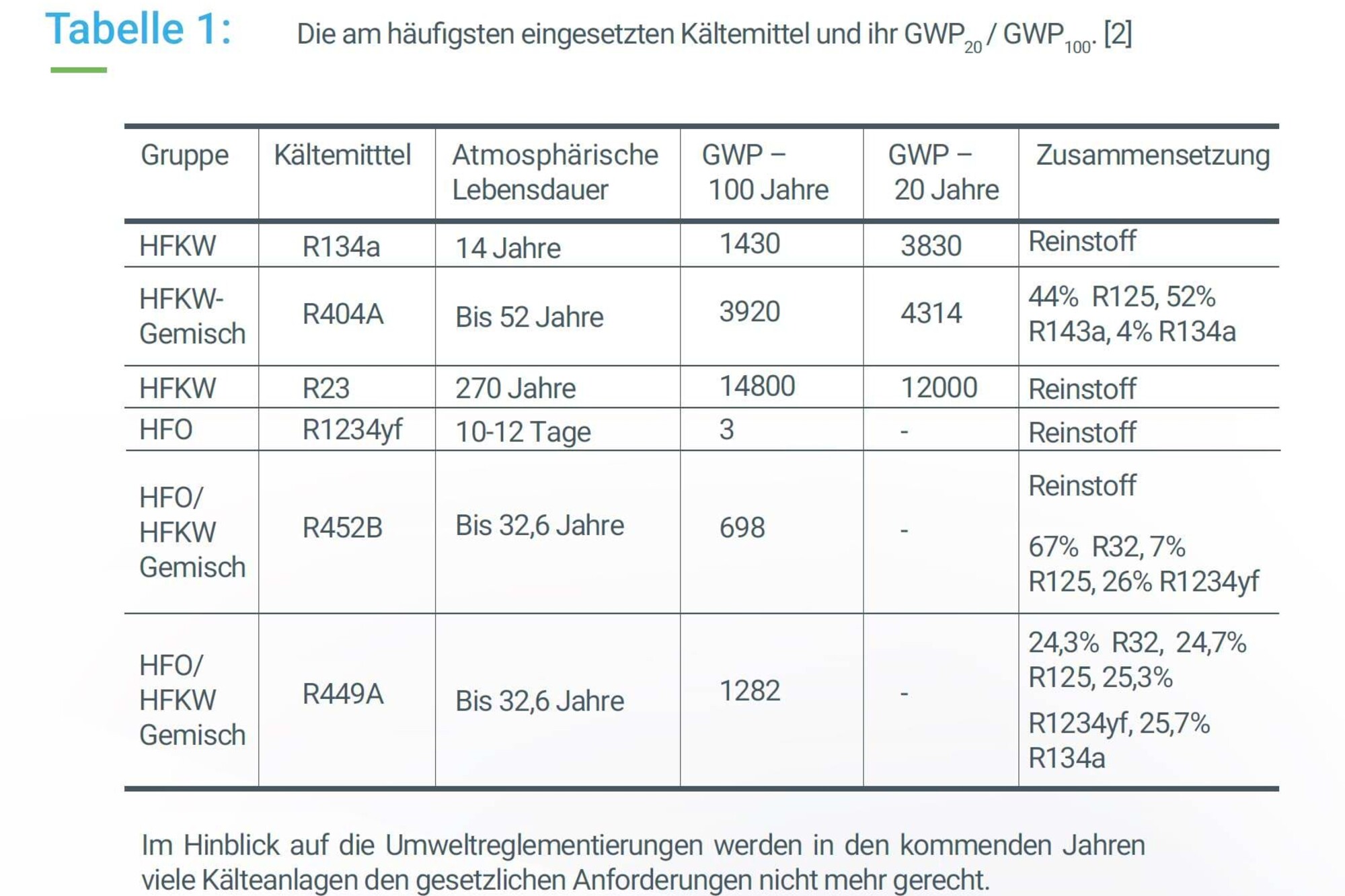
  • The most commonly used refrigerants and their GWP20 / GWP100:

    Newly introduced low-GWP refrigerants (HFO - hydrofluoroolefin) have a short atmospheric lifetime and lead to persistent degradation products (PFAS/TFA) when they decompose in the atmosphere. This results in long-term and more localised environmental pollution and a potential health risk (e.g. liver damage) for humans and the environment. Current water treatment processes cannot remove these substances. Energy-intensive processes (e.g. reverse osmosis) are required for treatment.

    The most commonly used refrigerants, their GWP and their atmospheric lifetime can be seen in Table 1.

In view of the environmental regulations, many refrigeration systems will no longer fulfil the legal requirements in the coming years.

F-Gas Regulation - reduction of the GWP value

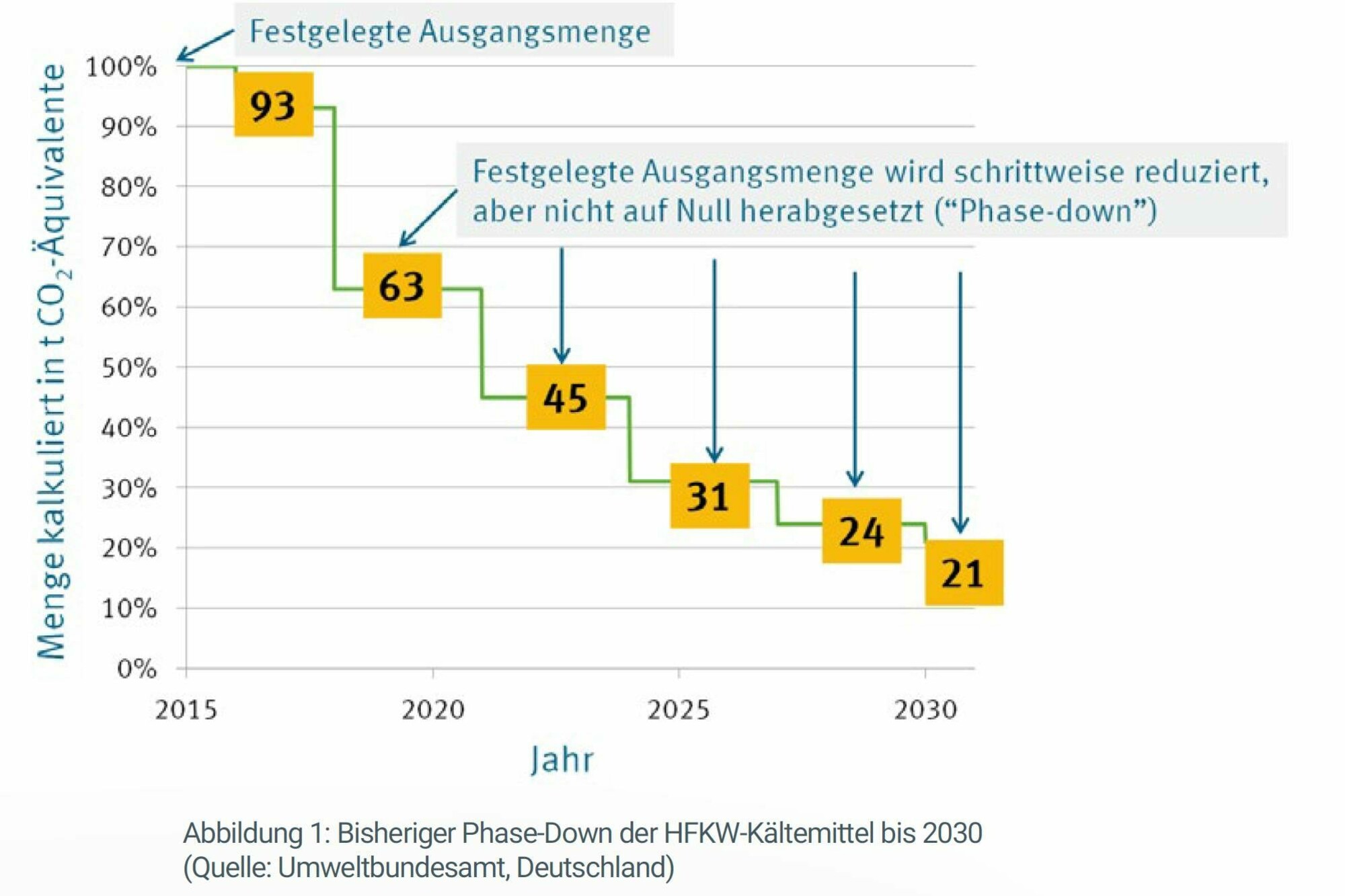
The EU F-Gas Regulation (Regulation (EU) No. 517/2014), which came into force in 2015, aims to reduce CO₂ equivalents from fluorinated greenhouse gases to around 21 % by 2030. To this end, the total amount of CO₂ equivalents (fluorinated greenhouse gases) permitted on the market will be gradually reduced (see Table 1). The initial value is 183.1 million tonnes (100 %), which corresponds to the average amount of CO₂ equivalents placed on the European market between 2009 and 2012. To compensate for this value, the whole of Germany would have to do without road transport for 1.25 years or shut down the agricultural sector for 2.7 years (as of 2020). Refrigeration systems with a charge of >40 tonnes of CO₂ equivalents, which are operated with a refrigerant with a GWP of over 2500, have been banned by Article 13 since 1 January 2020. The exception to this is for systems with a useful temperature of below -50 °C and for servicing and maintenance with recycled refrigerants. From 2030, recycled refrigerants may also not be used for systems with application temperatures >-50 °C. A revision of the F-Gas Regulation was finally proposed in 2022.

background image

  • Proposed changes:

    One of the proposed changes is to increase the emission reduction targets for the period 2021 to 2030.

    The CO2 equivalents are now to be reduced from 21% to 5% by 2030. These tightening measures are to take effect in the coming years.

F-Gas Regulation - Price development

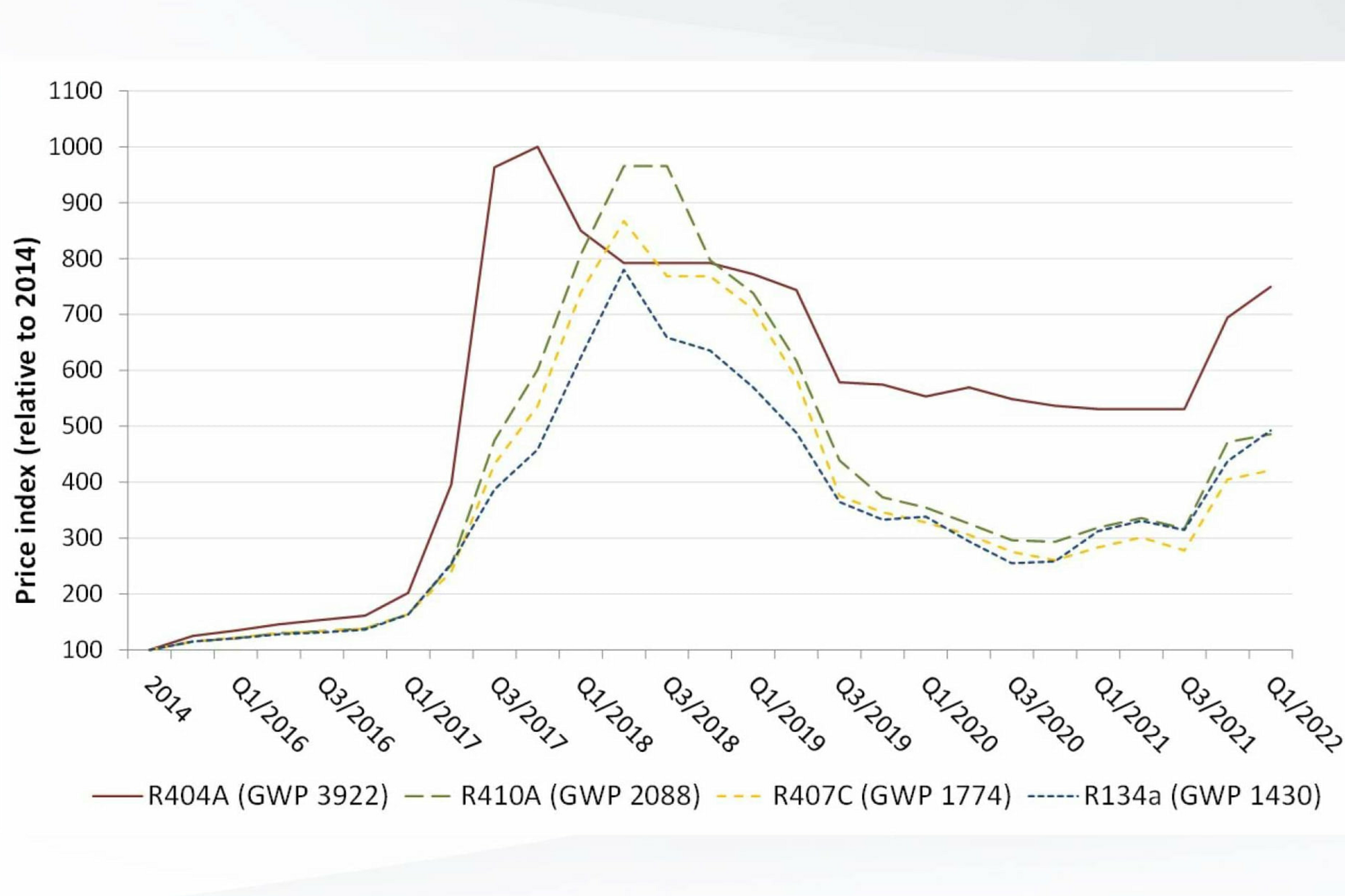
Supply and demand determine the price in a free market economy. Regulations and the associated limited availability of refrigerants on the market inevitably lead to an increase in the price of GWP refrigerants. The first restriction on the maximum quantity of CO2 equivalents to be placed on the market in 2017 resulted in a sharp rise in the price of refrigerants. The high rise in refrigerant prices has led to the formation of an illegal market for GWP refrigerants within the EU since 2018. As a result of this and the additional stockpiling of refrigerants, there was an oversupply of refrigerants in the third quarter of 2019, according to the Öko-Recherche Report, which led to a reduction in the price of refrigerants (Figure 2). 

background image

  • F-Gas Regulation - Price development

    The latest Eco Research report shows a price increase of the high GWP refrigerants R134a, R404A, and R410A (average price increase of 24%, 17%, and 15%, respectively, compared to Q1/2021) and blends of HFCs and HFOs (R448A, R452A, and R449A by 13%, 5%, and 4%, respectively). [Source: Monitoring of refrigerant prices against the background of Regulation (EU) No 517/2014 Q1/2022].

Illegal trade makes the goal of fulfilling the F-Gas Regulation more difficult.

In order to achieve the goals, an accelerated switch to natural refrigerants and the elimination of illegal trade are needed.

Task force to stop illegal imports

In the United States, a task force was set up in 2021 to prevent any attempt to illegally import or produce F-gases.
The task force announced a few months ago (March 2022) that it had prevented illegal HFC shipments amounting to around 530,000 tonnes of CO₂ emissions in the previous ten weeks. This is roughly equivalent to the CO₂ emissions of 100,000 households in one year. Previous regulations in the EU have not been able to prevent the illegal trade in F-gases. In order to make the illegal trade in refrigerants controllable, the customs authorities in the EU countries must be equipped with the right tools.

New generations of chemical refrigerants HFO (fluoroolefin hydrocarbons) are 4th generation refrigerants.

New generations of chemical refrigerants (HFO)

Compared to HFCs (partially fluorinated hydrocarbons), HFOs have a low GWP value and are seen as an alternative by the industry. The replacement of the climate-damaging refrigerant R-134a (GWP-1430), which is used for air conditioning systems in cars, with HFO-1234yf (GWP < 3) is underway. HFO-1234yf has a short atmospheric lifetime of 10-12 days and decomposes 100% to trifluoroacetic acid. Compared to R134a, with an atmospheric lifetime of 14 years and a decay to TFA of 7 to 20 %, the conversion leads to higher and more localised TFA emissions. TFA belongs to the group of short-chain perfluorocarboxylic acids (scPFCAs), which are persistent in the environment and highly mobile in the water cycle.

The topic of HFO/TFA can be found in our HFO/TFA Report 7.

Today's drinking water treatment plants are not able to filter out TFA, which means that humans are directly exposed to enriched TFA in drinking water. The current measurements of TFA in drinking water are below the drinking water guideline value for TFA.

However, an increase in concentrations of up to 13 times higher than in 2000 has already been observed in Switzerland.

background image

  • Potential damage to the liver

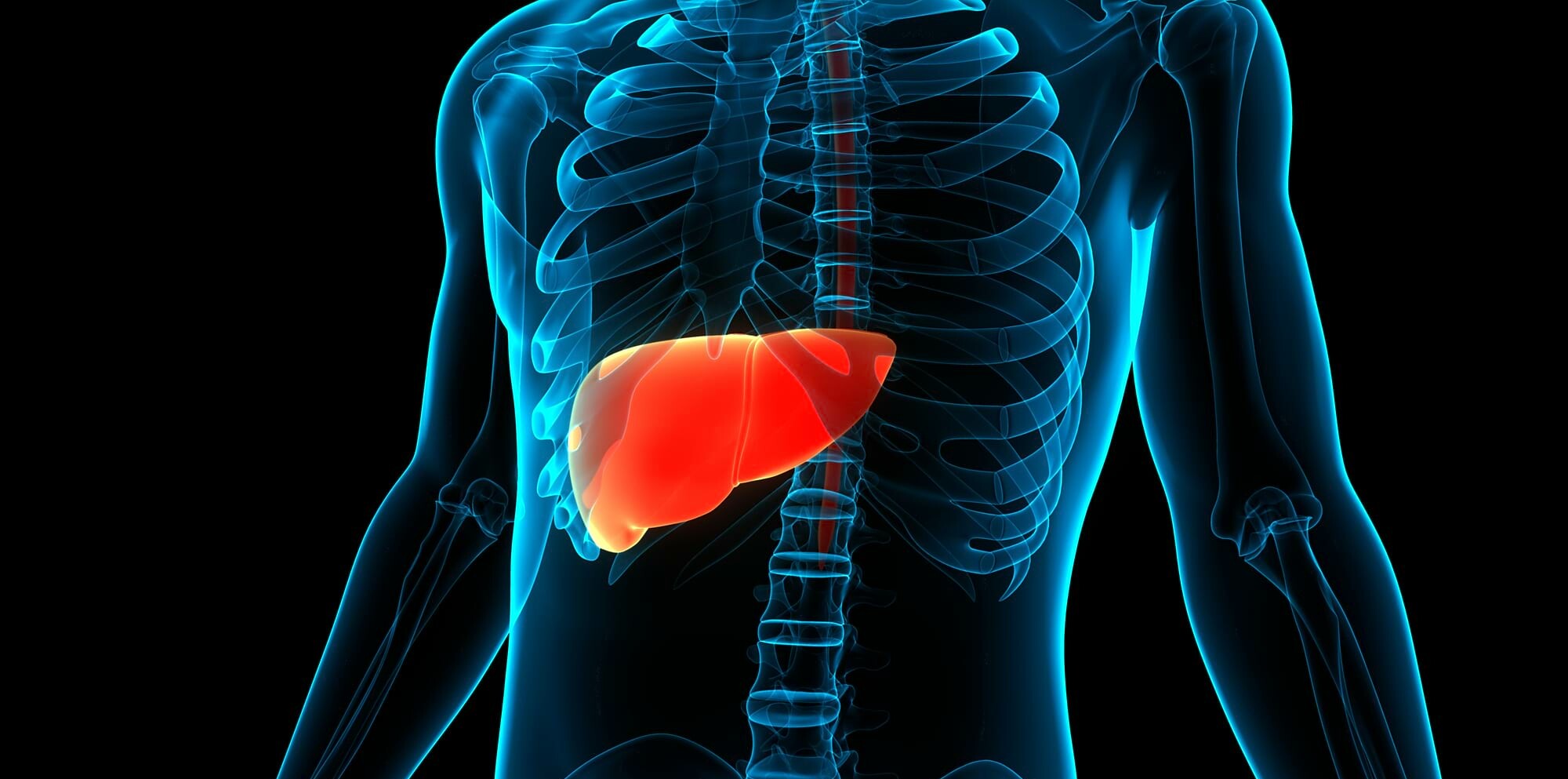
    In a study (Federal Environment Agency, 2020), an increase in the ALT concentration (alanine aminotransferase) was observed with increasing TFA concentration. An increased ALT concentration is a sign of liver damage, as destroyed liver cells release these enzymes. Similar symptoms occur with the administration of halogenated inhalation anaesthetics, such as halothane.

The health risks, in particular exposure to small amounts of TFA over longer periods of time, have not yet been conclusively researched.

TFA is formed in the body through the oxidation of halothane and an increase in the ALT concentration is recorded after administration and decreases again after administration is stopped. The same characteristic can be seen in the direct addition of TFA to drinking water from the UBA study. Before chemicals are introduced into the environment, it must be proven that they are harmless to both humans and the environment. It is only a matter of time before there will be negative effects on humans and the environment.

ECHA stands for European Chemicals Agency and is based in Helsinki, Finland. ECHA is responsible for the implementation of the EU chemicals regulation REACH, the Regulation concerning the Registration, Evaluation, Authorisation and Restriction of Chemicals, more detailed information can be found here.

<p

The proposal to restrict PFAS (per- and polyfluorinated alkyl substances), submitted to ECHA by the authorities in Denmark, Germany, the Netherlands, Norway and Sweden on 13 January 2023, is set to ban several thousand substances. The proposal aims to reduce PFAS emissions into the environment and make products and processes safer for people and the environment. A ban would affect various refrigerants, including all HFO refrigerants and some established refrigerants that are also part of refrigerant blends. HFO refrigerants in particular decompose in the atmosphere to form TFA; a highly mobile and persistent short-chain PFAS.

<p

An online information session will be organised on 5 April 2023 to explain the restriction process and to help those who wish to participate in the 6-month consultation phase starting on 22 March 2023.
Furthermore, all low GWP mixtures are affected as they contain HFO.
For example, R-452A/B, R-454A/B, R-455A, R-469A,
Energy efficiency

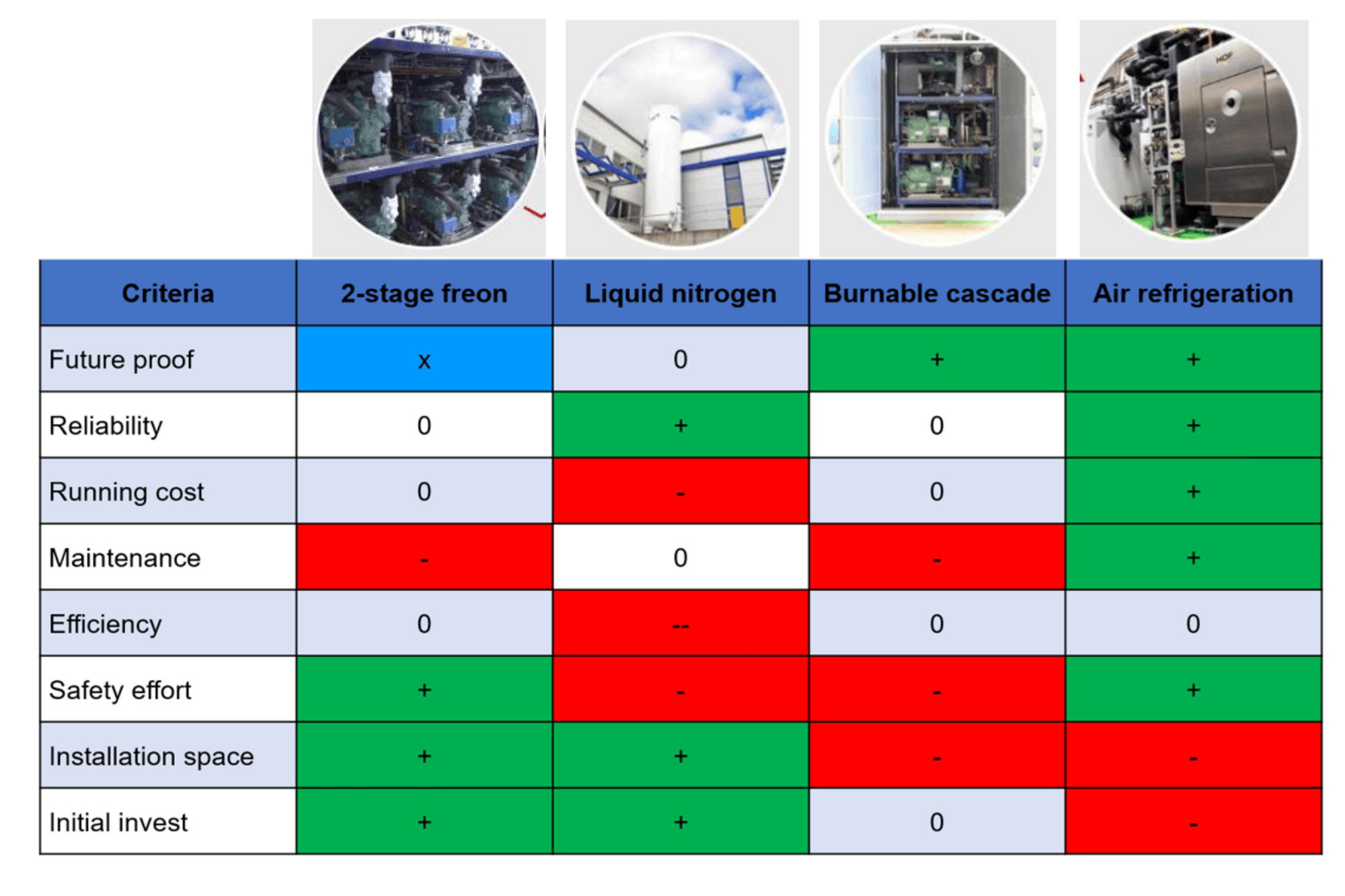
The aim of energy efficiency measures is to reduce the overall energy demand of processes by reducing the quantitative and qualitative losses that occur during the conversion, transport or storage of energy. Refrigeration systems require more drive energy (with a constant heat sink and a constant cooling capacity) the lower the useful temperatures are. The ratio of the cooling capacity and the drive power is described as the cooling capacity factor. For typical refrigeration systems for air conditioning, the cooling capacity factor is in the order of 3, i.e. for 1 kW of drive power, a refrigeration system provides 3 kW of cooling capacity for air conditioning. The maximum coefficient of performance that can be achieved in a loss-free, reversible process is described by the coefficient of performance of a Carnot process. This is purely dependent on the ambient temperature (heat sink) and the useful temperature (heat source). The lower the effective temperature required, the lower the coefficient of performance of a chiller. Different refrigeration processes have different efficiencies depending on the temperature. Compression refrigeration systems (2-stage booster systems or cascades) are more efficient in comparison with cold air refrigeration technology up to useful temperatures of -50 °C. From temperatures of  -70 °C, cold air refrigeration technology is the most efficient. Liquid nitrogen is often used for process cooling. This process differs fundamentally in that the refrigerant (nitrogen) is consumed and has already been produced in an air separation plant at temperatures of -196 °C. Generating liquid nitrogen at -196 °C requires significantly more energy than generating process temperatures of -80 °C with a refrigeration plant. Using nitrogen at high utilisation temperatures therefore leads to high nitrogen consumption and high energy costs, which are generally not included in the balance sheet of the manufacturing company. The choice of refrigeration technology therefore requires knowledge of the sensible areas of application of the various refrigeration technologies. You can find out more about energy efficiency in our freely available ULT report.

Natural refrigerants can replace the high GWP refrigerants currently used on the market!

Natural refrigerants have gained popularity in recent decades and technological developments in this area are making very good progress. They are competitive and even more efficient than chemical refrigerants.

Refrigerants currently in use

For example, CO2 heat pumps (GWP = 1) are used for water treatment at home or as booster systems for commercial refrigeration. Propane (GWP = 3) is also used for chillers. Ammonia (GWP = 0) is a refrigerant with good thermodynamic properties and is used in industry due to its high efficiency. Refrigerants such as R404A (GWP3922), R410A (GWP2088) or R507A (GWP3985) are currently used to generate low temperatures (e.g. freeze-drying). The global warming potentials (GWP) of these refrigerants are regulated by the F-Gas Regulation as a result of which the refrigerants will be banned in future or their use will be so severely restricted that they will only be available at very high prices. 

background image

  • Avoid problems

    In order to avoid being affected by these problems, it is worth switching to natural, environmentally friendly and safe technologies at an early stage. In recent years, refrigeration with air as a natural refrigerant has become established in various areas, including freeze-drying, and is regarded as a pioneering technology for a fail-safe, efficient and environmentally friendly process. Natural refrigerants are cost-effective, available in unlimited quantities and can already cover almost all refrigeration applications. With a very low GWP and high energy efficiency, the use of natural refrigerants is therefore recommended.

Significance for the operators

The majority of refrigeration systems for low-temperature technology are regulated by the EU F-Gas Regulation due to the refrigerants used (e.g. R404A, R410A, R499A, R23). Currently, high GWP refrigerants are permitted until at least 2030 due to the exemption in Article 13 of the F-Gas Regulation. Due to climate policy targets, operators will face further restrictions on the use of refrigeration systems with a high GWP in the coming years. Among other things, the -50 °C exception for the use of high GWP refrigerants is increasingly being criticised and possible phase-downs are being proposed. In order to continue to guarantee production reliability, strategic decisions must be made at an early stage and investments made in future-proof technology. Anyone currently investing in new systems and retrofits with a high GWP (e.g. R452A) runs the risk of no longer being able to operate their systems from 2030, as either maintenance will be prohibited or the availability of refrigerants will drop sharply and the costs of maintenance will increase significantly. Future-proof technologies will be long-term solutions with natural refrigerants, as these are environmentally friendly and efficient on the one hand and free from all regulations on the other. For applications below -50 °C, cold air refrigeration technology and cascade systems with flammable refrigerants have established themselves and are already being used safely in many applications. In addition to new systems, existing systems must also be considered. Many systems can be equipped with a retrofit on the refrigeration side without changing the actual process.

background image

  • Avoid supply bottlenecks!

    Early action is essential, as as soon as further restrictions are imposed, all plant operators will be affected and act at the same time.

    <p

Get advice now!

Cornelia Schröder
Cornelia Schröder
Assistant to the management