Industrial chimneys with steam

Steam generation for industrial processes - supplying process steam efficiently and precisely

Steam is a central process medium in many industries - for example for sterilisation, drying, reactions, separation processes or thermal treatment. The aim of industrial steam generation is to convert water into steam at a defined temperature and pressure level and feed it into your processes in a stable manner.

Refolution plans and implements steam systems in such a way that security of supply, energy efficiency and future-proofing come together. Depending on the application, we integrate electric steam generators, utilise waste heat sources or combine cooling and heating to create an overall system with maximum efficiency.

What is vapour generation?

Industrial power plant

Vapour generation is the technical conversion of water into steam by adding heat. The resulting steam is used as process steam to provide thermal energy in production and process engineering - for example for sterilisation, drying, reactions or thermal treatment steps. It is crucial that steam with reproducible properties (pressure, temperature, quality/dryness) is generated and safely distributed so that process conditions remain stable and products are of a consistently high quality.

<p

To achieve this, steam generators are designed to meet specific requirements: Steam quantity, load changes, pressure levels and integration into existing energy and heating systems play a key role. Efficient heat transfer, reliable condensate management and suitable control and safety technology are equally important. The result is a steam system that not only functions technically cleanly, but can also be operated economically and energy-efficiently.</p

Steam generation process

The process of steam generation begins with the supply of water to a steam generator. The water is heated until it reaches boiling point and turns into steam. This resulting vapour is then collected and used for various applications. There are different types of steam generators that are used in this process. An important aspect of vapour generation is efficiency. The more efficient the process is, the less fuel is needed to generate the desired amount of steam. This is particularly important in industries where large quantities of steam are required, such as power stations or the chemical industry. Various technologies are used to maximise efficiency, such as waste heat recovery. In this process, the waste heat from the steam is used to preheat the supplied water and thus reduce energy consumption. Another option for increasing efficiency is the use of high-pressure steam, which enables a higher energy yield. The quality of the steam produced is also of great importance. Impurities in the steam can lead to corrosion and wear on systems. Various processes are therefore used to remove impurities from the steam, such as the use of condensers or filters. Steam generation has a long history and is an important part of many industries. Through continuous research and development, new technologies are constantly being developed to make the process more efficient and environmentally friendly. Steam generation plays a crucial role in energy production and contributes to sustainable development.

Steam generation technologies

Industrial steam is generated in various ways, depending on demand and energy source. Direct-fired steam boilers (gas/oil) are the proven standard for stable process steam supply. Direct electric systems are becoming more important for decarbonisation - resistance/heating rod boilers and electrode boilers generate steam without combustion, very efficiently, dynamically and locally emission-free. Waste heat boilers/HRSG utilise waste gas or process heat to recover steam and reduce primary energy consumption. Biomass and residue boilers are options for biogenic fuels, while H₂-capable boilers and high-temperature heat pump cogeneration are future-proof solutions for further CO₂ reduction.

Steam generator in operation

Application of steam generators in the industry

Vapour generators play an important role in various industrial processes. They are used in a variety of industrial sectors to generate and utilise steam for different purposes.</p

Role of steam generators in industry:
Steam generators play a crucial role in power generation in industry. They produce steam that can be used to generate electricity. In addition, steam generators are also used in industrial processes such as food processing, chemical production and paper manufacturing to provide heat and steam for cooking, heating or drying materials.

Industrial sectors that use steam generators:
Different industrial sectors use steam generators for their specific requirements. The food industry uses steam generators to sterilise and pasteurise food. The pharmaceutical industry uses steam generators to create sterile environments for the production of medicines. The chemical industry uses steam for reaction processes and the production of chemical compounds. Even the textile industry uses steam generators for dyeing or steaming fabrics.

Advantages of using steam generators in industry:
The use of steam generators offers a variety of advantages for industry. Steam generators are efficient and provide a constant supply of high quality steam. They also offer flexibility in terms of controlling temperature and pressure, which is crucial in many industrial processes. In addition, steam generators are environmentally friendly and enable a reduction in greenhouse gas emissions compared to traditional energy sources such as oil or coal.

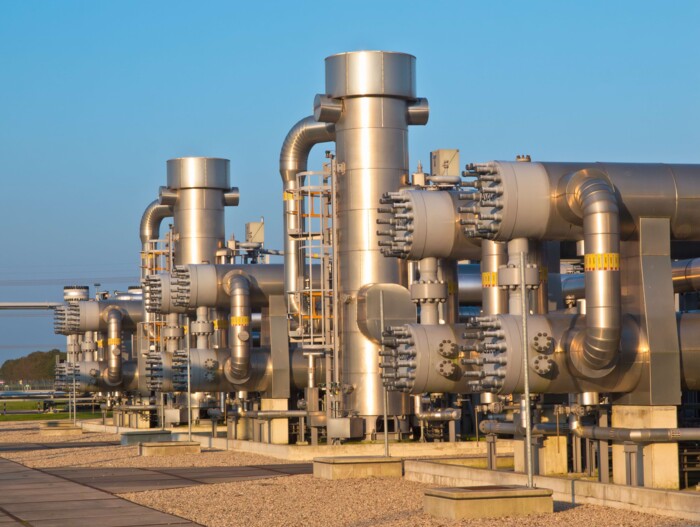
Electric steam generators: function and advantages

Electric steam generators are a reliable and environmentally friendly solution for process steam generation for many companies. They convert electrical energy directly into heat: Heating elements heat water in a closed system until water vapour is produced, which is used for industrial applications. As no fuel is burned, they are space-saving, require neither fuel storage nor exhaust gas routing, work very efficiently, heat up quickly and cause no local emissions during operation. They are particularly advantageous for changing load profiles because they can adapt their output very quickly. In combination with green electricity or waste heat cogeneration, they also make an effective contribution to the decarbonisation of industrial process heat.

Industrial steam boiler

Efficiency, waste heat & combined cooling, heating and power generation

One particularly effective lever for increasing efficiency is the utilisation of existing waste heat: heat from refrigeration systems or industrial processes is not dissipated unused, but used specifically for steam generation. This reduces the external primary energy requirement and significantly increases the overall efficiency. Refolution does not view steam in isolation, but as part of your energy system - we analyse waste heat sources and temperature levels, design suitable heat exchanger and coupling concepts, integrate electrical steam generation if required and develop an optimised control strategy for load changes and maximum efficiency. The result is a stable steam supply with reduced operating and CO₂ costs.

Plan your steam generation with Refolution

Whether electrical steam generation, waste heat cogeneration or complete process steam supply: We support you from analysis and design to commissioning and optimisation.

Matching products

Our services

Information on

Cornelia Schröder
Cornelia Schröder
Assistant to the management