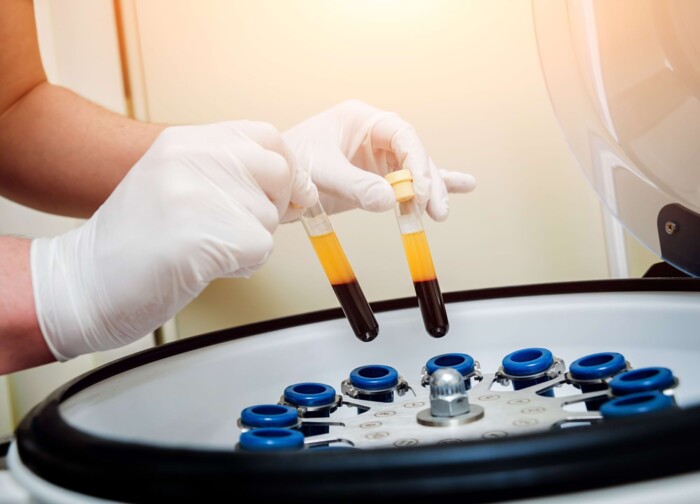
Blood plasma in test tubes

Your Blastfreezer application

A blast freezer is a freezing device that has been developed to quickly and efficiently bring blood plasma to extremely low temperatures, among other things.
This process is essential to optimally preserve the valuable components of plasma - including antibodies, proteins and other vital substances. Blood plasma has many applications in medicine, for example in blood transfusions, the production of medicines or the treatment of serious diseases. Thanks to the high freezing speed of a blast freezer, the quality and effectiveness of the blood plasma is maintained in the long term.

If you are looking for a device that meets the highest standards for preserving and freezing blood plasma, a blast freezer is the right choice.

Construction of a blast freezer: precision for optimum freezing processes

A blast freezer is characterised by its specialised structure, which is designed for maximum efficiency and accuracy when freezing. Inside, it has powerful cooling units that can reach temperatures as low as -110 °C r. These extremely low temperatures are crucial for freezing blood plasma and other sensitive substances quickly and preserving their quality.

The inner chamber of a blast freezer is usually made of stainless steel, which is easy to clean and particularly hygienic - a must for use in medicine and pharmacy. Precise sensors and digital control systems are integrated for temperature control, making it possible to monitor conditions precisely. Additional functions such as a rapid cooling option or alarm functions in the event of temperature fluctuations increase the safety and reliability of the device.

Thanks to its robust design, the Blastfreezer is also suitable for continuous operation, making it the ideal choice for laboratories, blood banks and medical facilities.

Blastfreezer interior

The components of blood

Blood consists of about half blood plasma, a yellowish liquid made up mainly of water and various proteins. The other half of the blood consists of cells called blood cells. There are three types of blood cells:

  • Red blood cells (erythrocytes): These are responsible for transporting oxygen. They contain the red blood pigment haemoglobin, which binds oxygen and transports it to the organs and tissues.

  • White blood cells (leukocytes): These play an important role in the defence against pathogens. They are part of the immune system and can fight infections. There are different types of white blood cells, each of which has specific functions in the immune defence system.

  • Platelets (thrombocytes): These are responsible for blood coagulation. In the event of injury, they ensure that the blood coagulates and the bleeding is stopped. They form a kind of "seal" to close the wound and reduce blood loss.

Blood fulfils a variety of vital functions: It supplies organs and tissues with oxygen and nutrients through the bloodstream. It transports carbon dioxide and other waste products from the cells for excretion. The blood also regulates body temperature and distributes hormones and various other substances throughout the body. Specialised cells and proteins in the blood are responsible for defence against pathogens and protect the body against blood loss after an injury.

History of the Blastfreezer: from a simple freezer to a high-tech solution

The development of the Blastfreezer began with the increasing demand for high-quality preservation methods for medical substances such as blood & blood plasma. In the 1950s, it was recognised that conventional freezing techniques were inadequate for sensitive substances such as blood plasma. While normal cooling devices worked too slowly, forming ice crystals that could damage cell structures, there was a need for devices that enabled ultra-fast cooling.

The first prototypes of blast freezers were developed in the 1970s. These were based on new types of refrigerants and improved insulation materials that allowed higher freezing speeds. Over time, the technology was refined further and further: more modern devices from the 2000s are not only more energy-efficient, but also offer more precise control systems and larger capacities.

Today, blast freezers are an indispensable part of the medical field. They ensure that blood plasma, organs and other life-saving substances can be stored under ideal conditions - a milestone in medical technology and an essential contribution to patient care worldwide.

Blood plasma in a test tube

The role & technical aspects of the blast freezer in blood plasma production

The blast freezer plays a crucial role in medical care as it ensures that the blood plasma can be stored for a longer period of time. This is particularly important as blood plasma is often difficult to obtain and has a limited shelf life. With a blood plasma freezer, hospitals and medical facilities can have sufficient quantities of blood plasma in stock to meet the needs of their patients.

<p

Technical aspects:

A blast freezer consists of various technical components that work together to efficiently freeze and store the blood plasma. These include a cooling mechanism that brings the blood plasma to the required temperature and a vacuum container that prevents oxygen and moisture from entering the system. In addition, most blood plasma freezers have a monitoring system that continuously monitors the temperature and condition of the blood plasma to ensure that it is stored properly.

<p

Another important aspect of a blast freezer is its capacity. Depending on the size of the device, different amounts of blood plasma can be stored. A smaller freezer can only hold a few vials of blood plasma, while a larger freezer is able to store a large amount of blood plasma. This is particularly important for medical facilities with a high demand for blood plasma, as it ensures that there is sufficient supply to meet patient needs.</p

Maintenance and cleaning of a Blastfreezer is also very important to ensure the proper functioning of the device. Regular inspections and cleaning are necessary to ensure the proper functioning of the freezer and to maintain the quality of the stored blood plasma. In addition, employees operating the freezer must be informed about the correct procedure for handling the blood plasma and the device to avoid possible contamination.</p

The development of blast freezers has significantly improved medical care. With the ability to efficiently freeze and store blood plasma, hospitals and medical facilities can ensure a continuous supply of blood plasma, expanding treatment options for patients. The technology behind the Blastfreezer is constantly evolving to improve the efficiency and safety of the device, further optimising healthcare.

Christian Berger

CSL Behring

Christian Berger · Global Director - Process and Technology Owner for Aseptic & Sterility

Refolution supported me in the technical verification of design and dimensioning of a Natural Refrigerant Cooling System for a new Freeze Dryer system.
I was very happy with the immediate support and competence of the Refolution Team. Thanks for your help.
Oliver Fleischer

HOF Sonderanlagenbau GmbH

Oliver Fleischer · Head of Service / Head of development - refrigeration technology department

With Refolution, the future of sustainability succeeds, coupled with efficiency and foresight.
The professional for the future.

The role of blood plasma in medicine

Blood plasma plays a crucial role in medical practice, especially in the treatment of various diseases and injuries.

A common use of blood plasma is transfusion in patients with blood loss or coagulation disorders. Blood plasma contains coagulation factors that are important for blood clotting. In cases of severe bleeding or coagulation disorders, the transfusion of blood plasma can be life-saving.</p

Blood plasma transfusion is usually administered intravenously. Before the transfusion, the blood plasma is separated from the blood cells and collected from donors. To ensure that the transfusion does not trigger any immunological reactions, the blood plasma is tested for compatibility and, in certain cases, specific blood group requirements are taken into account.

Blood plasma also plays an important role in the treatment of certain diseases. In patients with certain immunodeficiencies, such as primary immunodeficiencies or frequent infections, regular infusions of immunoglobulins (antibody-rich proteins) in blood plasma can reduce susceptibility to infection and improve quality of life.

In addition, blood plasma can be used in the treatment of burns, shock conditions and certain autoimmune diseases. The anti-inflammatory properties of blood plasma can help to reduce inflammation and promote healing.

Another important aspect of blood plasma is its role in research into new medical therapies. Researchers are using blood plasma to identify new biomarkers that can help in the diagnosis of diseases. In addition, blood plasma is also used for the development of vaccines and biotechnological drugs.

Overall, blood plasma is a valuable tool in medical practice. It plays a crucial role in the treatment of diseases and injuries and contributes to improving the health and quality of life of patients.

Centrifuge in the production of blood plasma

For the right system technology, it is important to analyse the parameters from the formulation and define the production cycles with simultaneity. This defines the requirements for the refrigeration technology, such as temperatures and capacities. This is the only way to select the optimum system for the process.

Information on

You can find suitable products for your freezing here

Our services for your freezing

Cornelia Schröder
Cornelia Schröder
Assistant to the management